What to Pack for a Kitesurf Holiday in Lanzarote
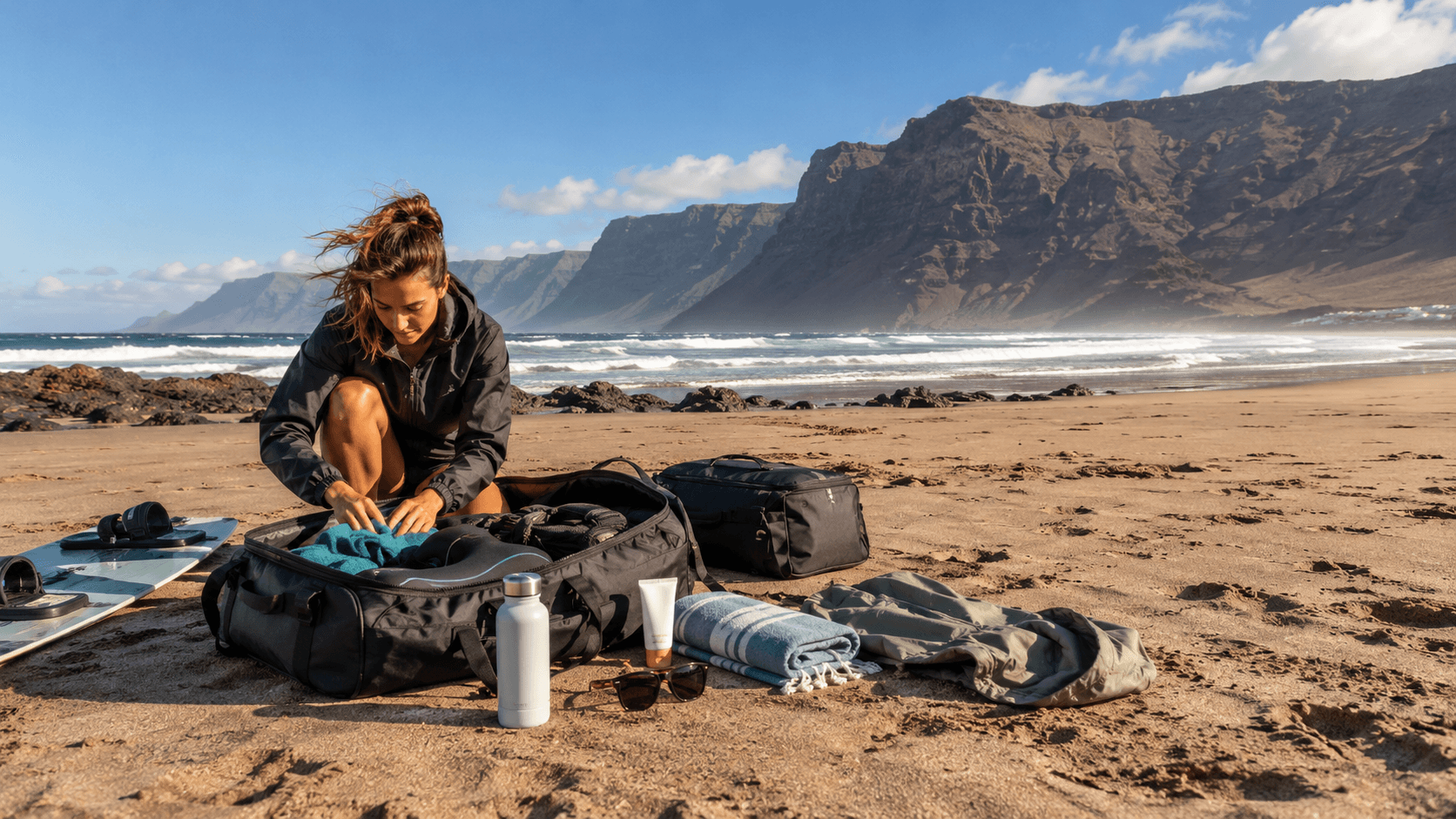
TL;DR: For a kitesurf holiday in Lanzarote, pack for a breezy beach day, changing conditions and time away from the water: sun protection, a light wind layer, swimwear, a towel, water and comfortable footwear. Do not buy or pack technical kite equipment for a first lesson until your school confirms what it provides and what suits the day.
What to pack for a kitesurf holiday in Lanzarote is less about filling a specialist bag and more about arriving ready to listen. Famara is a working Atlantic beach, not a controlled pool. The official Lanzarote guide to Famara notes its wind, changing water and currents, so the useful checklist starts with comfort, sun protection and a willingness to let a qualified instructor make the final call.
What should you pack for a kitesurf holiday in Lanzarote?
Pack the personal items that make a beach day comfortable: swimwear, a towel, high-SPF sun protection, sunglasses, drinking water, a light windproof layer and closed footwear for the journey. For beginners, the school should confirm technical equipment, fit and safety requirements before you bring or buy anything.
Start with a small day bag that stays easy to carry on sand. A reusable bottle, a snack, a dry change of clothes and a secure place for your phone make the gap between a session and a walk back through Famara simpler. Bring a cap for time off the water, but ask the instructor whether it is practical during the activity. Conditions, supervision and the type of lesson matter more than a generic packing list.
If you are staying nearby, our Famara accommodation guide can help you organise the ordinary parts of the week, such as where to dry a towel, recharge a phone and keep beach gear contained. That leaves more attention for the briefing when you arrive at the beach.
Why should beginners wait before buying kite gear?
A beginner should not guess at kite size, board choice, harness fit or safety setup from a holiday checklist. These choices depend on the rider, the equipment and the conditions on the day. Ask your school what it supplies, then use its guidance before spending money on personal technical gear.
Kitesurf equipment is a safety system as well as sports equipment. The International Kiteboarding Organization’s Kiteboarder’s Handbook highlights the role of safety systems and training with them. That is a useful reason to keep the first-trip kit simple. A qualified teacher can explain which items are provided, how they are checked and what you should practise.
Bring your own rash vest, wetsuit or harness only if the school has asked you to, or if you already know it fits and is appropriate. The goal is not to look prepared. It is to avoid turning unfamiliar equipment into another decision before your first briefing.
How should you dress for a Famara beach day?
Think in light layers. A warm-looking day can still feel different once you are exposed to wind, wet clothing and shade. Swimwear, a quick-drying top, a towel and a light jacket give you straightforward options before and after a session. Keep one dry layer in a sealed bag so you have something comfortable to put on after the beach.
Sun care deserves space in the bag too. The Canary Islands tourism board describes Lanzarote as a place with long sunshine hours and an outdoor-water-sport culture, but that is not a reason to assume your skin will cope without preparation. Use sun protection that suits you, reapply it as directed, and take shade or breaks when you need them. The island tourism guide is a helpful starting point for the beach setting, not a substitute for a current local assessment.
What documents and everyday items make the trip easier?
Keep the travel essentials separate from wet gear: booking details, identification, insurance information, any medication you need, a charged phone and a card or payment method. Add a small dry bag or zip pouch for keys and documents, then confirm the meeting point and timing with the school before you leave.
A short pre-departure note can prevent a rushed first morning. Save the school contact, tell it about relevant experience and ask what you need to bring. If you are travelling with friends who will not join the session, choose a meeting plan rather than leaving valuables unattended on the beach.
For a wider outline of the week, read our guide to choosing dates for a kitesurf camp. It explains why a flexible itinerary is more useful than expecting a fixed amount of water time. The same principle applies to packing: bring adaptable basics, then follow the day’s instruction.
How do you prepare without overpacking?
Use a three-part check. First, pack personal comfort items: layers, sun protection, water and a towel. Second, pack travel essentials: documents, medication and a phone. Third, make a short list of questions for the school about equipment, clothing and the meeting point. That is more useful than trying to recreate a fully equipped kite shop in your suitcase.
Leave room for the realities of travel. Wet clothing needs somewhere separate, sand gets into open bags and a long beach day can make a lightweight layer unexpectedly valuable. If you have a specific concern, such as prescription glasses, skin sensitivity or mobility needs, raise it directly before your trip instead of relying on this general guide.
Where should your checklist end and the instructor’s advice begin?
Your checklist ends at personal preparation. An instructor’s advice begins with the safety briefing, current conditions, equipment setup and the decision about whether an activity is suitable. Famara’s official beach information says that strong currents can occur and that the water is not always calm. That makes a local decision on the day more important than any packing article.
When you are ready to discuss dates, experience and current lesson options, contact VolcanoKite about lessons. This is the one contextual VolcanoKite path in this satellite guide. It is intended to help you get current practical advice, not to promise a particular session or progression result.
This local draft still requires two approved original-evidence elements, a real named author and a named instructor review before publication. That review must confirm the exact equipment policy, current lesson process and any location-specific safety guidance.
Frequently Asked Questions
Do beginners need to bring a kite to Lanzarote?
Not unless the school has specifically asked you to. Beginners should confirm what the school provides and use its advice about equipment, fit and safety systems before bringing or buying technical gear.
Should I pack a wetsuit for a kitesurf holiday?
Ask the school first. The appropriate clothing depends on the conditions, activity and your own comfort, so a local instructor is better placed to advise than a generic packing list.
What shoes are useful for a Famara beach day?
Bring comfortable footwear for travelling to and from the beach. Ask your instructor what is suitable during the lesson, because the answer can depend on the location, conditions and activity.
Can I learn kitesurfing with only holiday clothes?
You can arrive with practical beach clothes, sun protection, water and a dry layer, but you still need the school’s advice about lesson-specific equipment. Do not treat personal holiday clothing as a replacement for a safety briefing.
What should I do if the conditions change?
Follow the instructor’s assessment. Wind, waves and beach conditions can change, and a responsible school may adjust or postpone an activity rather than force a session into unsuitable conditions.
Important: This content reflects general wellbeing benefits associated with outdoor sport and ocean immersion. It is not medical advice and our courses are not a substitute for professional mental health care. If you're dealing with a serious or ongoing mental health concern, please speak with a qualified professional.