Best Time of Year for a Kitesurf Camp in Lanzarote
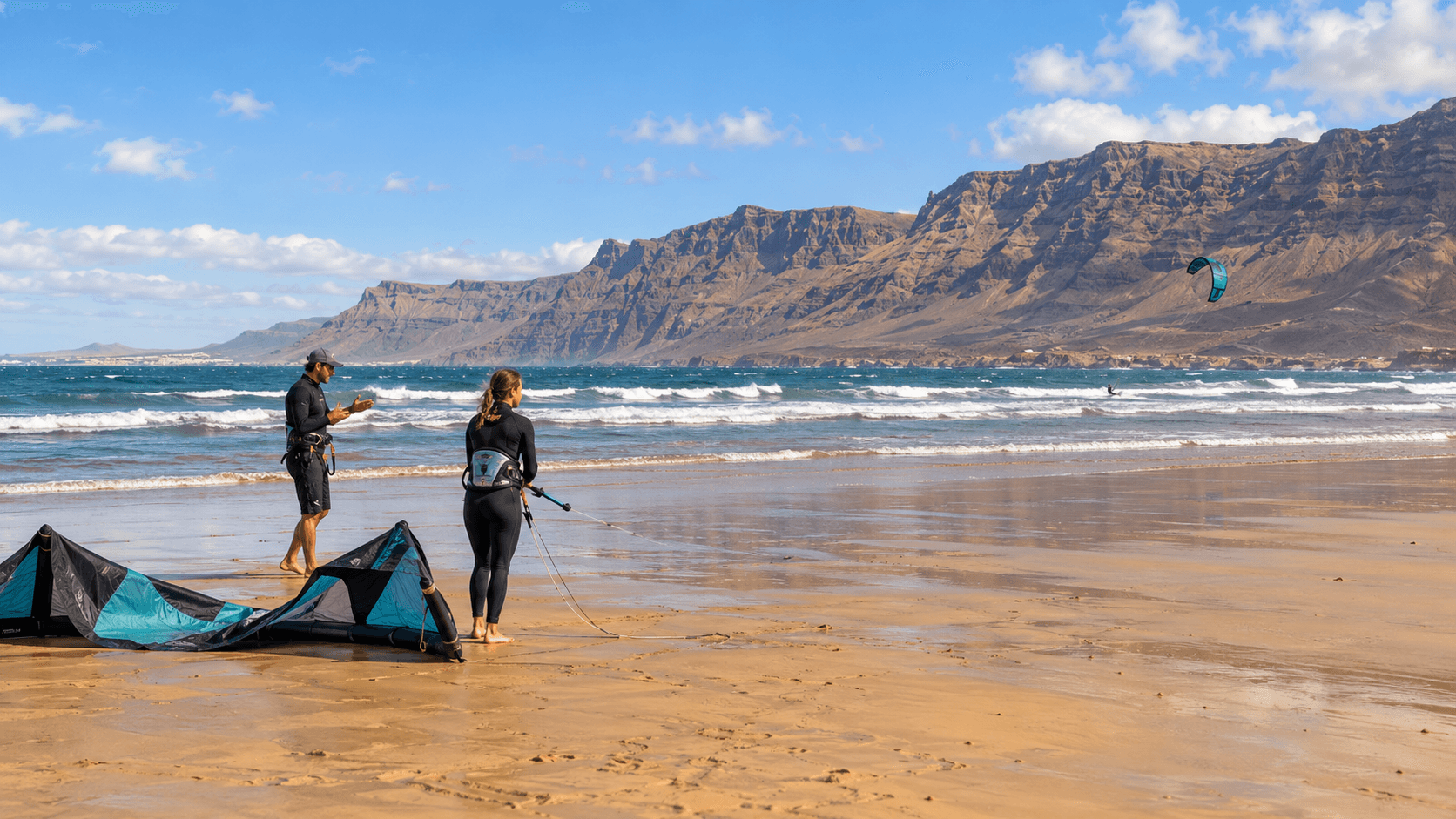
TL;DR: The best time of year for a kitesurf camp in Lanzarote depends less on finding one perfect month and more on choosing a week with flexible expectations. Famara offers a beach used for kitesurfing, but wind and sea conditions still change day by day. A camp works best when your plan includes a lesson assessment, time to learn, and an easy place to reset between sessions.
If your normal week runs on calendars, messages and a screen that never quite goes dark, a kitesurf camp can give the day a different structure. The first decision is practical: choose a period that lets you stay responsive to the conditions, then let a qualified instructor decide what is suitable on the day. That is a more useful plan than treating any season as a guarantee.
When is the best time of year for a kitesurf camp in Lanzarote?
There is no single best month for every kitesurfer in Lanzarote. The right time depends on your level, how many days you can stay, and whether you can adapt your plan to the forecast and a current beach assessment. Beginners benefit most from booking instruction and keeping their schedule flexible.
Famara is a long, sandy beach in Teguise where the island tourism board lists wind, surf, windsurfing and kitesurfing among its features. It also records strong waves, which is a useful reminder that a destination description never replaces a session-by-session decision. Read the official Playa de Famara information before travel, then ask your instructor what the day actually allows.
For a first camp, give yourself more than a single lesson window. Extra days create room for a gradual progression, a pause when conditions are not appropriate, and time to absorb the skills you practise on land. That is especially valuable when you are learning a sport that asks you to notice wind direction, equipment setup, safety systems and your position on the beach.
What changes through the year in Famara?
Famara does not offer a fixed, identical kitesurfing experience throughout the year. Wind, swell, tide and the beach environment can vary, so seasonal planning should be treated as a starting point for a conversation with a local school, not a promise about your lesson conditions.
That variability is part of the point of a camp. A good week is not built around forcing a session because it is on the itinerary. It is built around paying attention to the environment, listening during the briefing, and using the time available for the right stage of learning. VolcanoKite’s current wind guide also frames conditions as something to assess locally, rather than something a forecast alone can settle.
Visitors who want a quieter, more practical trip can choose dates around their own energy and travel schedule. What matters is not whether a calendar says a month is perfect. It is whether you can arrive rested, leave space for instruction, and avoid placing a single session under pressure to deliver an entire holiday.
Why a camp format can help beginners learn at a steadier pace
A camp format joins the useful parts of a learning week: a place to sleep, time to review the day, and a clearer route back to the beach. Our Famara accommodation page explains the local stay option, while the lessons overview shows the sports available. Neither page can determine suitability, but together they help you plan a week around learning rather than a rushed activity booking.
For many first-timers, the work starts before going into the water. You may discuss the wind window, how a safety release works, where to stand, and why the instructor chooses a particular part of the beach. Those steps can feel slow when you only have an afternoon. Over several days, they become part of the rhythm of a camp.
Learning an outdoor skill does not promise a particular mental or physical outcome. It can, however, give your attention a clear job for a few hours: follow the briefing, handle equipment carefully, read what is happening around you, and stop when the instructor says the conditions have changed. That focused experience is one reason some guests prefer an active week to an itinerary filled with passive plans.
How should you plan a flexible kitesurf camp week?
Plan a Lanzarote kitesurf camp around a flexible lesson sequence, not a guaranteed number of water hours. Book an enquiry with your travel dates and experience level, ask what assessment happens before the first session, and keep alternatives in your itinerary for days when the conditions are not suitable.
Start with the straightforward details: your swimming confidence, relevant watersports experience, how many days you have, and whether you need accommodation. Then contact VolcanoKite to discuss lessons with those details. Their contact page provides the current enquiry route and location in Caleta de Famara.
Pack for time on the beach as well as time in the water. Sun protection, a layer for after a session, water, and clothing that works for a changeable coastal day are practical basics. The school should confirm the equipment and safety requirements rather than relying on a generic packing list.
What should you do when conditions are not right for your lesson?
If conditions are not appropriate for your level, the right response is to follow the instructor’s decision and use the day differently. A responsible camp does not turn unsuitable wind, waves or beach conditions into a reason to continue. Safety and progression come before a fixed schedule.
That can mean a land-based review, a different activity, or a rest day. The Lanzarote tourism board’s guide to the island’s outdoor setting is a useful starting point for planning time away from a lesson, without pretending there is a substitute for an instructor’s call.
It also prevents an unhelpful expectation: that every visitor should be at the same stage by the end of a week. Progress differs with experience, conditions and the pace that feels safe. The aim is to leave with sound foundations and a realistic sense of the next step, not an invented milestone.
Questions to ask before choosing your dates
Before you book, ask the school what information it needs to assess your level, how it handles changing conditions, what equipment it provides, and what happens if a planned water session cannot go ahead. Ask for a named instructor or technical reviewer before relying on safety or progression claims. These are practical questions, and clear answers are more useful than broad promises about the season.
For this local draft, the publishing team still needs to add two pieces of approved original evidence, a named author and a named instructor review before it can be released. That review should confirm the exact lesson flow, safety process and any no-wind alternative currently offered by VolcanoKite.
Frequently Asked Questions
Can complete beginners join a kitesurf camp in Lanzarote?
Beginners should speak with a qualified school about their experience, swimming confidence and travel dates. The school should assess conditions and choose an appropriate lesson plan rather than assume every day suits a first session.
How many days should I allow for a kitesurf camp?
More than one day gives you room for instruction, review and changes in conditions. The useful number of days depends on your starting point and the school’s assessment, not a fixed progression promise.
Is Famara suitable for kitesurfing all year?
Famara is used for kitesurfing, but beach and sea conditions change. Check the current forecast and follow the local instructor’s assessment before each session.
What happens if there is too much wind or swell?
A school should decide whether conditions are suitable for your level. If they are not, do not treat a water session as guaranteed: ask the school about the day’s alternative plan before you book.
Do I need to bring my own equipment?
Confirm this directly with the school. Equipment, fit and safety requirements should match the activity and conditions on the day.
Important: This content reflects general wellbeing benefits associated with outdoor sport and ocean immersion. It is not medical advice and our courses are not a substitute for professional mental health care. If you're dealing with a serious or ongoing mental health concern, please speak with a qualified professional.