Beginner Kitesurf Camp Lanzarote: A Practical First-Week Guide
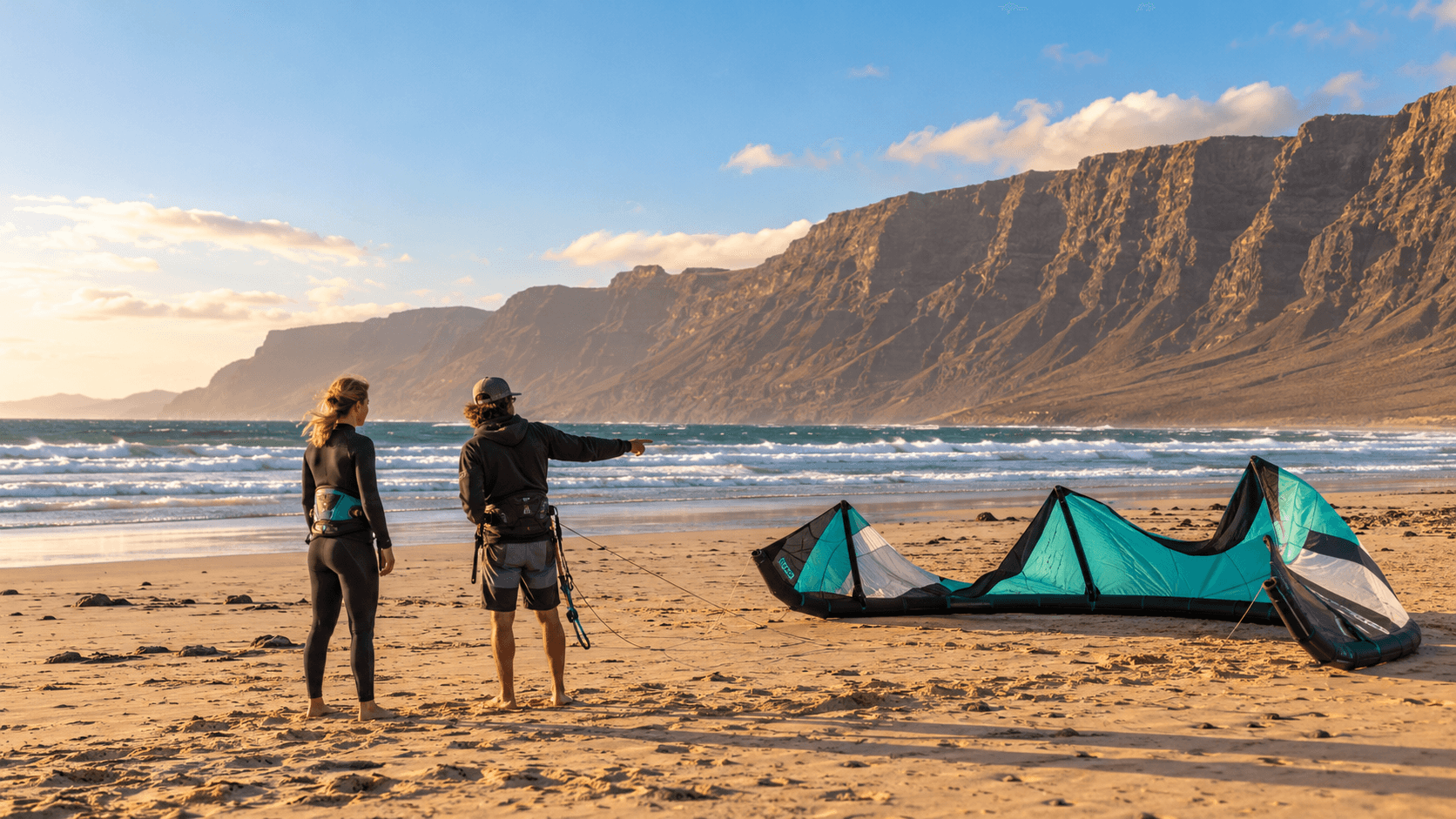
TL;DR: A beginner kitesurf camp in Lanzarote works best as a flexible learning week, not a promise of a fixed number of water hours. Plan accommodation, time for a briefing and a direct conversation with the school. At Famara, the beach, wind and sea conditions need a local assessment on the day, so qualified instruction and a calm itinerary matter more than arriving with a rigid plan.
A beginner kitesurf camp in Lanzarote can be a useful way to give your first lessons enough time. It is also an outdoor activity on an Atlantic beach, where conditions can change. The official Famara Beach guide describes a windy beach with strong currents and a designated kitesurf area. That is why a good first week starts with questions, flexibility and a school’s current assessment, rather than a shortcut to fast progression.
What should a beginner expect from a kitesurf camp in Lanzarote?
A beginner camp should give you time for a safety briefing, equipment guidance, coached practice and changes to the plan when conditions require it. It should not promise that every hour will happen on the water or that every visitor will reach the same level in one week.
Learning a wind sport has a practical rhythm. You may begin with the setting, the equipment and the day’s safety instructions before any later stage of practice. The useful part of staying for several days is not a guaranteed outcome. It is having enough room to learn at an appropriate pace, ask questions and let the day’s conditions shape the session.
Famara is not a controlled lagoon. Lanzarote’s official guide notes that the beach is often windy, the water is not always calm and currents can be strong. Treat that as a reason to work with a qualified local school and to keep the rest of your day simple. A beach walk, a meal and a dry change of clothes can be just as sensible as trying to fill every hour with activity.
Why does a flexible itinerary matter for a first week?
A flexible itinerary gives the school room to choose an appropriate activity, timing or alternative plan based on the actual conditions and your readiness. For a beginner, that is more valuable than booking around one forecast screenshot or treating a camp timetable as a guarantee.
Forecasts can help you decide what to pack and how much time to allow, but they cannot replace the briefing at the beach. Build in arrival time, sleep and a buffer around your first planned session. If the conditions or your energy are not right for a particular activity, asking the school what changes is the responsible next step.
Where you stay changes the feel of that flexibility. Our Famara accommodation overview can help you plan the practical side of the week, including a base close to the beach. It is not an activity schedule, and it does not replace a school’s current advice, but a nearby base can make it easier to arrive unhurried and return comfortably after a beach day.
What should you confirm with a school before booking?
Ask what the school needs to know about your experience, swimming confidence, any practical requirements and your travel dates. Ask what it provides, what you should bring and where the meeting point will be. These questions are not a test. They help the school explain what is suitable for the day and help you avoid buying equipment or making assumptions before your first briefing.
It also helps to ask how changes are handled. A responsible answer will be specific about contact, meeting arrangements and how the plan is confirmed. The lessons overview shows the sports covered by this camp site, but the final choice of activity and conditions must come from the qualified team on the day.
For a direct, current conversation about dates, level and lesson options, contact VolcanoKite. The live contact page allows visitors to provide dates, sport and level, which makes it the relevant next step from this satellite guide. It is one contextual conversion link, not a claim that a particular lesson, result or weather condition is available.
How should you prepare for Famara without overpacking?
Bring personal beach essentials, such as swimwear, sun protection, drinking water, a towel and a warm layer for after the beach. Wait for the school’s guidance before bringing or buying technical kite equipment, because fit, setup and suitability depend on the session and conditions.
Keep the first-trip checklist ordinary. Bring booking details, a charged phone, anything you personally need for the day and a dry change of clothes. The point is to arrive comfortable and ready to listen, not to recreate a fully equipped kite shop in your luggage.
If you want a more detailed packing plan, see our kitesurf holiday packing checklist. It explains why personal comfort items are different from technical equipment. A local instructor is better placed to explain what is needed for the actual plan.
What might a beginner camp day look like?
No two days at Famara are the same, so treat any daily plan as a frame that the school adjusts. A realistic beginner day usually starts with a check of the forecast and a conversation about what the conditions mean for your level. If the session goes ahead, expect time on the sand before you go in the water: setting up equipment with the instructor, learning how the kite reacts to the wind and practising how to depower it and let go safely.
Many first sessions focus on kite control rather than standing on a board. That is normal and useful. Being able to keep the kite steady, steer it calmly and react to a gust is what makes the next steps safer. When the instructor is happy with your control, the next stage is often body dragging, where you move through the water with the kite and no board, before you try board starts.
Between sessions, use the time well. Rest, eat, drink water and review what you practised. Ask your instructor what to focus on next time, and write it down if that helps you remember. If the wind is not suitable, a quieter day is not wasted: it is a chance to recover, stretch and enjoy the rest of the island.
How should you choose where to stay for a beginner camp?
For a first week, staying close to the beach where you learn takes a lot of pressure off your plans. Lessons depend on wind and tide, and the best window can move during the day. If you can reach the beach quickly, it is easier to adapt when the school changes a time, and you spend less of your holiday in a car.
Think about what you need after a day in the sun and wind: somewhere to rinse your gear and wetsuit, a place to dry clothes, a kitchen if you prefer to cook, and a quiet room to sleep well. Ask about these details when you book. If you are travelling with a partner or friends who are not learning, check what they can do nearby while you are on the beach. A camp that combines accommodation and lessons can make these arrangements simpler, but confirm what is included before you pay, and keep the school's advice about conditions at the centre of your plans.
How can you set a realistic goal for your first camp?
Make the goal about participation and clear information, not a named milestone. You might aim to understand the briefing, practise the steps your instructor gives you and leave with a better sense of whether you want to continue. That is a useful outcome even if the weather changes or your week looks different from an online video.
Be open about what you already know and what makes you nervous. Good preparation is not pretending to be more experienced than you are. It is giving the school accurate information so it can advise you responsibly.
This local draft needs a named author, named instructor review and two approved original-evidence elements before it can be published. Those reviews must confirm any site-specific lesson process, safety guidance and conversion details. Until then, it is a local editorial draft rather than a public promise.
Frequently Asked Questions
Do I need kitesurfing experience before joining a beginner camp?
Tell the school exactly what experience you have and ask what it recommends. A school can explain the appropriate starting point after considering your information and the current conditions.
Can I rely on a weather forecast for my first kitesurf lesson?
A forecast is useful for planning, but it does not replace a local assessment. Famara’s conditions can change, so follow the school’s briefing and current advice.
Should I buy a kite before travelling to Lanzarote?
Do not buy technical equipment just to prepare for a first lesson. Ask the school what it provides and what it recommends after discussing your needs and the session.
What should I bring to the beach?
Bring personal essentials, such as sun protection, drinking water, swimwear, a towel and a dry layer. Confirm any lesson-specific items with the school before you travel.
What happens if the conditions are unsuitable?
Ask the school how it handles changes. A responsible plan may adjust the timing or activity rather than force a session when conditions are not appropriate.
Important: This content reflects general wellbeing benefits associated with outdoor sport and ocean immersion. It is not medical advice and our courses are not a substitute for professional mental health care. If you're dealing with a serious or ongoing mental health concern, please speak with a qualified professional.